

15 min, 3,429 words
Automation in software development is no longer optional, it’s how modern software teams reduce costs, ship faster, and build products that last. But the benefits only materialize when you apply automation strategically. Here’s what that looks like in practice.
3 Easy Steps to Make Modularis Your Trusted Partner
Our on-boarding process engages your entire organization in a staged process that aligns technical milestones with your business objectives. Learn what you need to get started today!
Key Takeaways
- Automation in software development reduces Time to Value by eliminating repetitive tasks, reducing errors, and freeing your team to focus on innovation.
- Not everything should be automated — human expertise is still essential for architecture, product strategy, and business decision-making.
- Rules-based AI delivers consistency and reliability; generative AI adds speed and creativity. You need both, guided by human judgment.
- “Timeless software” is achievable when automation builds the foundation first, then supports incremental growth quarter by quarter.
- Performance AI goes beyond basic automation — it integrates AI across the entire software lifecycle to optimize business outcomes, not just development speed.
- The goal isn’t Time to Market. It’s Time to Value.
How automation in software development reduces Time to Value
Automation in software development reduces Time to Value by streamlining repetitive tasks, minimizing errors, accelerating innovation, and enabling scalable, long-lived software systems.
Be sure to use a strategic approach to maximize your team’s human effort and creativity.
What is automation in software development?
At its core, automation in software development refers to the use of AI, tools, and structured systems to handle repetitive tasks, reduce errors, and improve efficiency across the entire software lifecycle. When implemented correctly, it doesn’t just speed up development; it improves business outcomes.
- Software development automation is not just for new product launches – it can help modernize and create “timeless software.”
- Implement automation for software development in a way that tackles repetitive processes while giving your team more time for innovation.
- Platform Builder is an automation solution that builds the foundation of your software product faster and at lower cost, accelerating software innovation by 10x.
Why software development automation matters more than ever
The pace of software innovation expected by the marketplace keeps increasing, and not just for new products.
If your company has built a successful software product, brought it to market, and established a customer base, you still need to keep innovating. Customers’ demands don’t stop.
If you want to not only retain your revenues but also maximize customer lifetime value (LTV), you have to continuously deliver new value to your customers every 90 days.
Using AI automation in software development can help you keep innovating for the long term. But you have to be smart about how to implement automation.
Build software right, fast, and built to last
To succeed with automation, your approach needs to help your team:
- Build software right
- Build it fast
- Build it to last
Here are the four biggest benefits of automation in software development — and how they reduce Time to Value:
- Benefit #1: Tackle repetitive tasks
- Benefit #2: Reduce errors and improve product stability
- Benefit #3: Accelerate innovation
- Benefit #4: Create “timeless software”
Benefit #1: Automating Software Development Tackles Repetitive Processes
Automation in software development, if applied correctly through rule-based systems and AI, generates the scalable and bullet-proof infrastructure necessary to free up engineering teams to focus almost exclusively on just those things that create business value for customers. The net result is higher quality products delivered to customers in less time, with less risk, at a lower cost.
“42% of your development time is wasted on repetitive tasks.” – Source
That’s nearly half your engineering investment going toward keeping the lights on rather than building what’s next. Automation changes that equation.
What should you automate (and what shouldn’t you)?
| Best suited for automation | Requires human expertise |
| Repetitive tasks | Product strategy |
| Infrastructure setup | System architecture |
| Testing and deployment | UX and product design |
| Rules-based processes | Business decision-making |
The best strategy for using automation in software development is to take a focused approach to software automation. Commit to automating the repetitive parts of the software construction process that are best suited to rules-based AI and automation.
Just like building a physical product at a factory: if you need to weld the same two pieces together over and over again, or insert the same 14 screws in the same spots, those are great tasks for a robot.
But for certain complex operations on the factory floor or creative inputs into the software development process, AI and robots aren’t good enough.
You need people.
Use AI and automation to do what machines do best. But don’t assume that automation can do everything that humans do best.
Can AI replace human expertise in software development?
A common mistake that some software company leaders make is believing that AI and automation can replace all skilled labor. Now with AI becoming all the buzz, some software company investors or board members might believe that, “ChatGPT is gonna build my software for me.”
Here at Modularis, we disagree with the idea that AI can replace skilled labor altogether.
We believe that generative AI will help your engineering team deliver more software at a faster rate, but it cannot build a commercially stable, scalable, profitable, and serviceable software product for you.
Remember – every commercially viable software product needs to have these four components.
The 4 requirements of a viable software product
Your software product must be:
- Stable: If not, you’ve got nothing to sell.
- Scalable: If you can’t sell and bring on new customers as fast as you need to… the product will fail.
- Profitable: Ramping up new customers cannot cost you money. You have to monitor the operating expenses and management costs upfront.
- Serviceable: If it’s not serviceable, you’ll have to rebuild it. When are you going to find time to do that? And if you don’t solve the serviceability upfront, you can’t innovate quickly enough. You won’t be able to bring net new value to your customers fast enough to keep up with growing demand once that first version is out.
The human decision-making element is the key component of delivering on these 4 tenets of effective, modern software product development in the AI age.
Automation only works if you have smart people defining the, ‘Should we build this?’ and ‘How is it architected?’ questions.
The risk of over-automating software development
No generative AI tool can crank out commercially viable software products that cover all these bases. So don’t make the mistake of trying to use automation for every aspect of software development.
Just like in the world of manufacturing, you’re not going to be successful in replacing all of your skilled people with robots.
Companies throughout recent history have tried this.
Elon Musk had to scrap hundreds of millions of dollars of robotic hardware on the Tesla factory floor because they discovered that there are some things that people do better.
It’s great that software companies are embracing automation. It’s valuable to add automation to the software development mix to stay ahead of the competition. But be smart about it. You can’t afford to take years to build a product, you have months.
Generative AI won’t do it all for you.
Benefit #2: AI Automation in Software Engineering Reduces Errors and Improves Product Stability
AI automation in software engineering reduces errors and improves product stability by standardizing processes, enforcing consistent rules, and eliminating manual inconsistencies across the software development lifecycle. By relying on deterministic, rules-based systems, teams can build more reliable and predictable software.
“AI, if left to its own devices, destroys consistency. AI produces slop by default. To remedy this, it takes a LOT more than a massive god block in your Claude.md file.
The answer is to surround your AI model with a fully deterministic, highly consistent infrastructure that can feed your model with the clean and structured data it needs to deliver results your customers expect.
This necessary infrastructure can itself be completely automated, through rule-based code generation platforms like Modularis’ PlatformBuilder.” – A.J. Singh
What is rules-based AI in software development?
AI is here to stay.
And rules-based AI for software development has the potential to create massive value.
Rules-based AI uses pre-written rules and if/then statements to make decisions and solve problems across the software development lifecycle based on encoded human knowledge.
It uses deterministic logic (if/then rules) to ensure consistency—making it ideal for:
- Infrastructure setup
- Security protocols
- Architectural scaffolding
- Repetitive development tasks
Where AI automation works best
This type of SDLC automation works best when it’s focused on automating the areas that are most error-prone and repetitive.
Use AI automation to free up your team for human effort and creativity.
How automation improves product quality and stability
With a smart usage of AI in software engineering, your software team can use their time for:
- Software architecture
- Product design
- Improving the user experience
- Adding features and software components that your users value
Automation in software development can help ensure consistent quality and give you solid structures in your platform.
Finding the right balance between automation and human input
Be realistic about what makes sense to automate and what doesn’t. Striking the right balance of automation vs. human construction will help you establish a strong foundation and maintain the integrity of the product you’re building. It brings the benefits of automation while managing risks and potential downsides.
That’s how you maximize value creation for your customers and your shareholders.
Benefit #3: Automate Your Software Platform, Accelerate Innovation
Automation accelerates innovation in software development by reducing time spent on maintenance, infrastructure, and repetitive tasks—allowing engineering teams to focus on building new features and delivering value faster. When implemented correctly, automation removes bottlenecks and increases the speed of iteration.
Why “fully automated software development” is a myth
Not all AI and automation in software development are equally effective. People have been trying to automate software development since the 1960s.
Even before ChatGPT, there were several attempts over the years by companies like Microsoft, where the vision was, “We should never have to write code again. We should have a magical design thing where you push a button and out comes a completely finished software product, all ready to go.”
Here’s the problem with this kind of magical thinking about AI in software engineering:
ChatGPT isn’t gonna save you.
What can automation actually do for your software team?
With generative AI for software coding, to truly create value for software companies and your customers, the AI needs excellent architecture and plumbing to feed its data correctly and accurately. That software “plumbing” and infrastructure is ripe for automation. But it doesn’t create a viable software product all by itself.
How Platform BuilderSMaccelerates innovation
Modularis has been working on software automation for decades, and this is what our Platform BuilderSM solution can help accomplish.
Platform Builder builds upon our PlatformPlus® technology to generate your entire platform for you. This is a massive portion of what you need to build, and it gives you all the structures so your software engineers and software developers can focus on what really matters.
With Platform Builder, you can accelerate software innovation by 10x without rewriting your product – because your software team can spend less time on maintenance and fixing bugs, and focus 80% (or more) of their time on innovation!
Benefit #4: Automating Software Development Can Create “Timeless Software”
Instead of focusing only on speed, automation enables the creation of timeless software by supporting long-term product growth and sustained customer value, measured by improving revenue retention, generating net new revenue, extending LTV, and reducing costs.
Time to Market vs. Time to Value
Every software company wants to move fast and get products to market.
Automating software development can help speed up time to market – but remember, “time to market” is not always the most important metric. Instead, focus on Time to Value.
| Metric | Time to Market | Time to Value |
| Focus | Speed of launch | Speed of delivering value |
| Goal | Ship quickly | Deliver meaningful outcomes |
| Risk | Unstable or incomplete product | Slower initial release but stronger product |
| Outcome | Short-term gains | Long-term growth and profitability |
| Alignment | Development speed | Business outcomes + customer value |
You want to focus, at every step of the software development process, on creating value for the customer. And automation used improperly can create negative value.
How automation supports long-term product growth
By leveraging automation for software development in the right way, you can build and add to your product, delivering incremental value and driving revenue, quarter by quarter.
Just like building a house: smart software automation should build the foundation first, and then build layers upon that.With a good foundation and a smart approach to incremental software modernization, your software products will be more likely to keep customers happy for a long time and maximize LTV by delivering value steadily, over and over again.
Why foundation-first architecture matters
At Modularis, our approach to software automation from the beginning was to embrace automation, but use 3GL (3rd generation languages) like JavaScript, and keep everything open, not a proprietary black box.
We didn’t want to take control away from professional software engineers and architects.
But by using automation in this smart, targeted way, we’ve helped our clients keep their software products:
- Updated
- Scalable
- Profitable
- Serviceable
… all while launching value-adding new features and generating net new revenue.
Making “timeless software” a reality
“Timeless software” isn’t just a concept—it’s achievable with the right foundation and automation strategy.
And we make it happen with software platform automation.
What is Performance AI and how does it improve automation in software development?
Performance AI improves automation in software development by integrating AI across the entire software lifecycle—combining rules-based automation and generative AI to increase efficiency, reduce Time to Value (TTV), and optimize long-term business outcomes.As automation in software development has matured, a new concept has emerged: Performance AI.
What is Performance AI?
Performance AI is the strategic integration of AI across the entire software lifecycle to optimize both:
- Technical efficiency
- Commercial viability
Rather than just focusing on “writing code faster,” Performance AI focuses on:
- Time to Value (TTV)
- Long-term product sustainability
What Performance AI actually does
Performance AI is not a bolt-on tool—it’s a system-wide approach that:
- Automates “plumbing” (rules-based AI) to ensure reliability
- Augments creativity (generative AI) with human oversight
- Optimizes business outcomes across the product lifecycle
| Type of AI | Best use case | Strength |
| Rules-based AI | Infrastructure, security, scaffolding | Consistency and reliability |
| Generative AI | Code suggestions, ideation | Speed and creativity |
| Human input | Architecture, strategy | Judgment and decision-making |
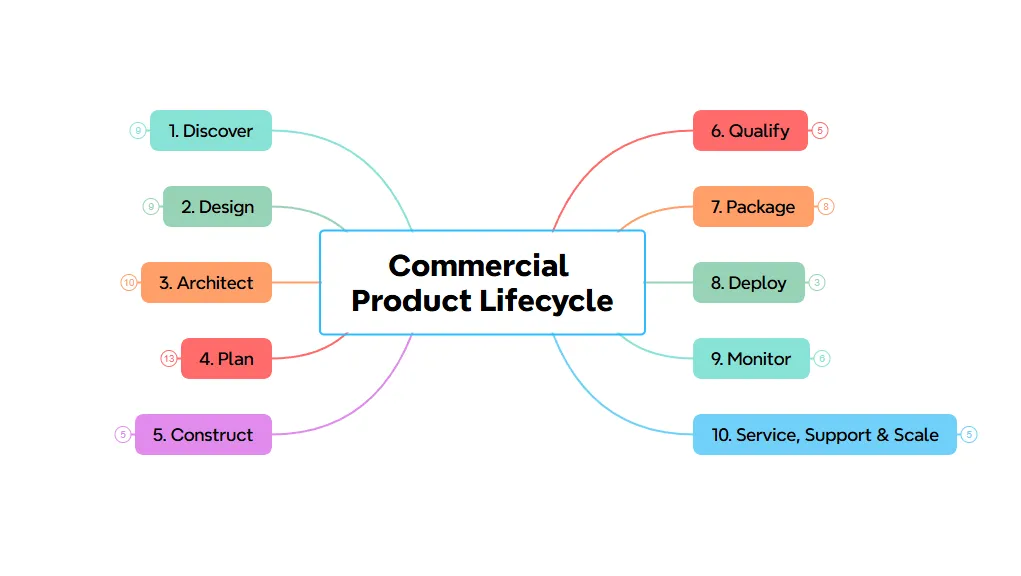
Why Performance AI matters now
This is how modern software teams move beyond basic automation—and start using AI to drive measurable business results, not just faster development.
The core pillars of Performance AI
The core pillars of Performance AI define how AI should be applied across the software lifecycle to ensure reliability, scalability, and long-term business value, not just short-term efficiency gains.
1. Deterministic reliability
Critical systems rely on rules-based automation to ensure consistency and eliminate variability. This is the backbone of scalable, stable software systems.
2. Human-centric decisioning
AI enhances — but does not replace — human expertise. Strategic decisions about product direction, system design, and profitability must remain human-led to ensure long-term success.
3. Reduced “spaghetti code” risk
Performance AI includes built-in quality controls that reduce technical debt and prevent unmaintainable AI-generated code from accumulating over time.
4. Timeless architecture
By building on open, standard languages (like C# or JavaScript), automation ensures long-term flexibility, maintainability, and independence from proprietary systems.
Why automation in software development is shifting toward Time to Value
Automation in software development is shifting toward Time to Value because delivering software faster no longer guarantees business success — what matters is how quickly that software creates measurable value for customers and the business.
Why is Time to Market no longer enough for software success?
Historically, teams prioritized Time to Market. But shipping faster doesn’t matter if the product is unstable, expensive to maintain, or difficult to scale.
What Time to Value actually prioritizes
That’s why modern software lifecycle automation strategies are shifting toward Time to Value—aligning development with:
- Business outcomes
- Customer value
- Long-term profitability
How Performance AI supports this shift
Performance AI reinforces this shift by connecting automation directly to measurable results — ensuring that every development effort contributes to real business impact.
How to achieve faster Time to Value with software development automation
To achieve faster Time to Value with software development automation, you need more than just tools — you need a strategic approach that combines automation, strong engineering discipline, and experienced architects to guide implementation.
Here is proof that this works every time: See Our Success Stories
Why automation alone isn’t enough
Automating software development has huge potential to generate value for customers and boost productivity in our industry. But implementing software automation is not just about technology.
As McKinsey notes, “simply giving developers AI tools does not meaningfully move the needle.” The real value comes from rearchitecting how software is built and embedding AI across the entire lifecycle.
That level of change doesn’t happen by accident. It requires a clear strategy, disciplined execution, and deep expertise in how to apply automation across your product.
That’s why it’s not just about tools — it’s about finding the right technology partner to guide you in how to use software automation to your company’s best advantage.
At Modularis, we use automation smartly as part of a larger, disciplined, rigorous software engineering approach. We embrace automation not just for “getting to market” but for maintaining and modernizing a product over time to maximize LTV.
Automation in software development is not just about, “let’s crank out a bunch of new stuff really fast!”
Your priority should not be Time to Market, it should be Time to Value.
The 4 requirements of Time to Value
Every automated software development project still needs to achieve the four key components of a successful, commercially viable software product:
- Stable
- Scalable
- Profitable
- Serviceable
Time to Value means: you can achieve all four of these components to really deliver value to your customers and shareholders.
Anything less, and you might just be lighting money on fire.
The key questions that define your success
Achieving faster Time to Value is a much bigger project than simply “adding automation.” You need a team approach and software engineering discipline.
Along with the execution of the product, you need to ask and answer:
- Do you know what value your customers need?
- Do you have a financial model that’s going to work in your target market segment?
- Are you ready with packaging, delivery, and support?
- Have you timed the offer correctly? Do you know which feature sets need to be delivered first, second, and third to maximize your revenue opportunity and your R&D dollars? Building X before Y can make a massive difference in overall cost, risk, and Time to Value.
Why the right technology partner matters
All of these questions take time.
You need a partner who can help you:
- Define a clear technology roadmap
- Validate your approach
- Align your product, pricing, and delivery model
What successful execution actually looks like
What does it look like when the right team is in place and the right approach to smart automation for software development is underway?
The other day, I was texting a client about a new product launch, and he asked me if I was happy with where things stood in the project timeline. I wrote back:
“Yes, I am. We are on track, and the hammer is fully down. The right things are being done by the right people in the right order. And it shall remain so.”
Automating software development is not just about pushing a button and a magical product pops out. It’s about implementing the right processes and actions with the right people in the right order.
Map your fastest path to Time to Value
Your team has to find a way to get there. You need a team that can make that happen and leverage AI and automation for software engineering. That smart approach to automation, combined with disciplined software engineering, will unlock the biggest benefits of all.
Book a working session to map your fastest path to Time to Value using automation, AI, and a production-grade development system.
FAQ: Automation in Software Development
Automation in software development refers to the use of AI, tools, and structured systems to handle repetitive tasks, reduce errors, and improve efficiency across the entire software lifecycle. When implemented strategically, it also helps teams accelerate innovation and improve business outcomes.
AI automation improves software engineering by standardizing processes, reducing manual errors, and ensuring consistency across development environments. This allows engineering teams to focus on higher-value work like architecture, product design, and innovation.
The key benefits of automation in software development include:
• Reducing repetitive manual tasks
• Improving product stability and reliability
• Accelerating innovation and feature delivery
• Enabling scalable, long-term software systems
These benefits ultimately help reduce Time to Value and improve business outcomes.
Performance AI is a system-wide approach that integrates AI across the entire software lifecycle to optimize both technical efficiency and commercial viability. It combines rules-based automation and generative AI to improve Time to Value and long-term product sustainability.
Time to Market measures how quickly a product is launched, while Time to Value measures how quickly that product delivers meaningful business results. Modern software teams prioritize Time to Value to ensure long-term success, not just speed.
You can reduce Time to Value by combining automation with strong engineering discipline, clear product strategy, and the right technology partner. This includes prioritizing the right features, building scalable systems, and aligning development with business outcomes.
No, AI cannot fully replace human expertise in software development. While AI can automate repetitive tasks and improve efficiency, human decision-making is still essential for architecture, product strategy, and ensuring long-term success.