
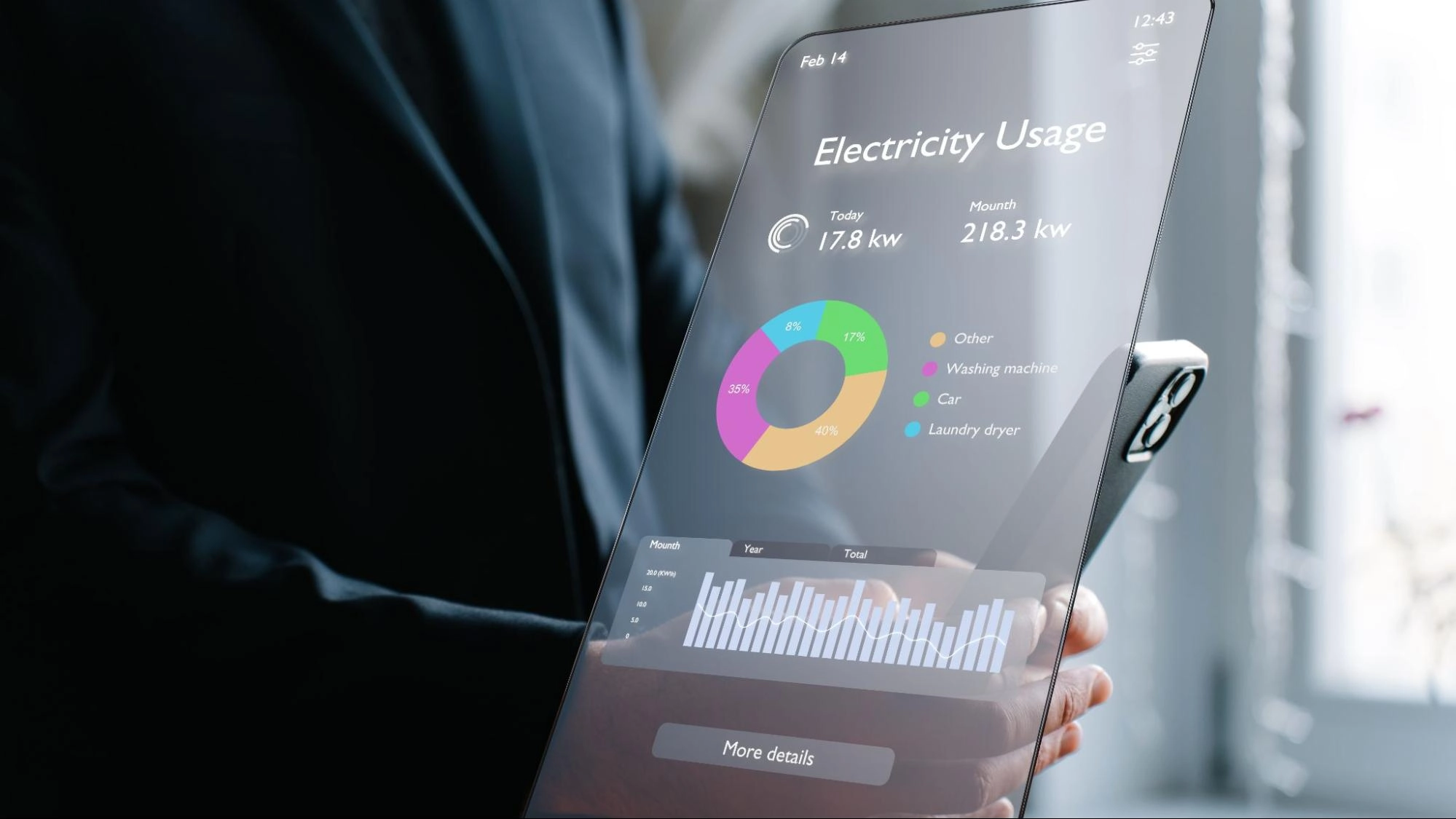

The Internet of Things (IoT) in the energy sector allows utilities and operators to monitor power grid conditions by using internet-connected devices and real-time data analysis. Utilities, grid operators, and energy companies use these systems to remotely track consumption, manage assets, monitor equipment across their infrastructure, and make more data-driven decisions.
IoT is growing at a rapid double-digit pace in this sector, driven by the shift toward smart grids, renewable energy integration, and artificial intelligence. Combined with cloud computing, machine learning, and predictive analytics, IoT enables utilities to better forecast demand, optimize battery storage, and improve overall grid operations while helping reduce carbon emissions.
In this article, we’ll explore 5 key IoT in energy statistics and trends to unpack how the market looks today and where it’s going.
3 Easy Steps to Make Modularis Your Trusted Partner
Our on-boarding process engages your entire organization in a staged process that aligns technical milestones with your business objectives. Learn what you need to get started today!

Research Methodologies
There are lots of different market reports out there with different data, and the data comes from these firms’ own methodologies.
We pored through existing market research data from primary and secondary research sources to get an idea of which statistics from these reports might be the most accurate of the available options. We’ve listed these sources at the end of the article.
We considered the date the research was published, the timelines they reviewed in the research, and their data collection methods, and used the most recent, most rigorously sourced data available for each statistic.
Coupled with our own experience in IoT, this roundup consists of what we consider to be the most accurate statistics about the IoT in energy market.
1. The IoT in energy market was valued at $38.5 billion in 2025 and is expected to reach $75.03 billion by 20351
The global IoT in energy market was valued at $38.5 billion in 2025 and is projected to reach $75.03 billion by 2035, according to a report from SNS Insider. This puts the IoT in energy market at a compound annual growth rate (CAGR) of 10.96% during the forecast period.
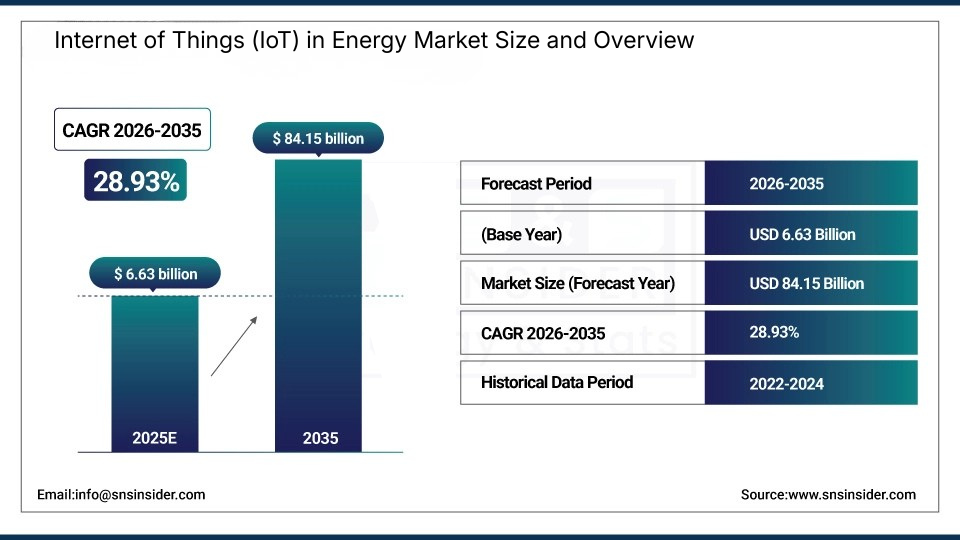
The growth is associated with rising adoption of smart grids and real-time monitoring technology use across the energy sector. Continued investment in smart energy management systems from utilities, gas, and oil companies is another large contributor to the growth.
S&S Insider attributes this growth to aging grid infrastructure that requires modernization, government-backed smart grid initiatives, and rising integration of renewable energy sources such as solar and wind power.
Asia Pacific is the fastest-growing region, driven by urbanization and government spending on smart grid technology, with China and Japan as active investors in IoT-based smart city energy management.
2. Global energy demand grew by 1.3% in 20252
According to the IEA’s 2026 Global Energy Review, global energy demand grew by 1.3% in 2025. This represents a significant slowdown from the previous year, when demand grew 2%.
Slower economic growth, lower cooling demand due to more mild temperatures, and faster improvements in energy intensity all contributed to the deceleration.
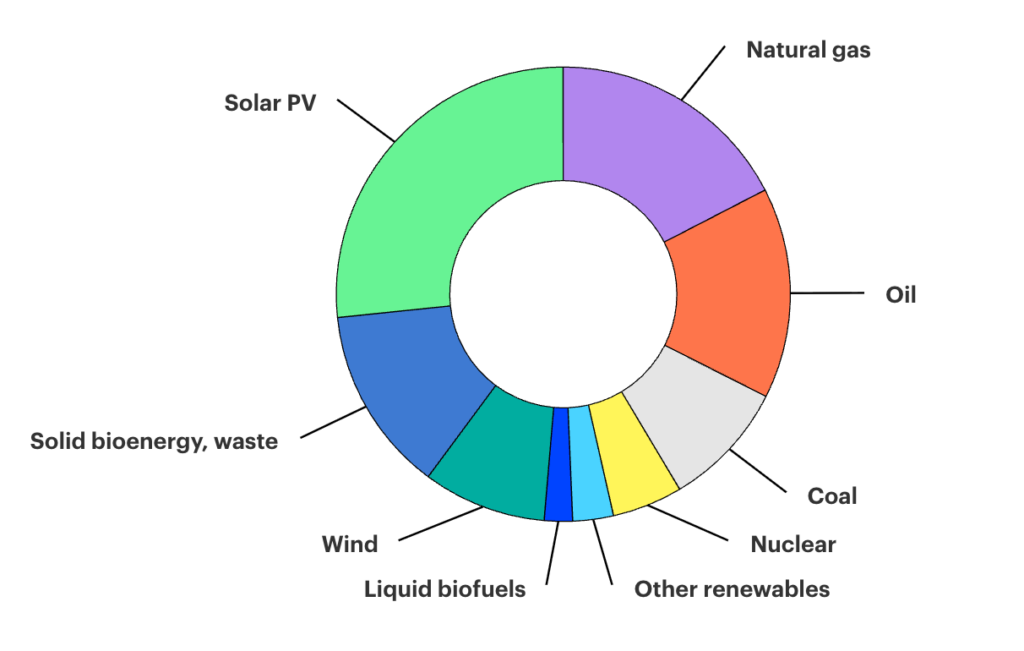
Solar PV met more than a quarter of global energy demand growth in 2025, at 27%. This marks the first time a modern renewable source represented the largest share of growth.
This was followed by natural gas at 17%, oil at 15%, solid bioenergy at 13%, and wind and coal both at 9%.
Global electricity demand grew by around 3%, more than twice the rate of overall energy demand, driven in part by rising consumption from electric vehicles and data centers.
The screenshot below visualizes the share of energy demand growth by source in 2025.
3. Connected EV infrastructure is expanding at a 15.05% CAGR3
Connected EV charging infrastructure is the fastest-growing application within the IoT-in-energy market, expanding at a 15.05% CAGR through 2031, according to Mordor Intelligence.
This growth is tied to the dual role EV chargers play on the grid: they draw power as a load, but bidirectional models can also feed stored energy back, functioning as a distributed storage asset utilities can call on for load balancing.
Utilities increasingly treat connected chargers as flexible nodes capable of supplying reactive power and absorbing midday surpluses from solar generation. Governments are subsidizing bidirectional charger deployment and requiring open-protocol telemetry, both of which are pushing more connected chargers into the broader IoT-in-energy market.
4. The U.S. will need 28 million EV charging ports by 2030 to support an estimated 33 million EVs4
A national charging network of 28 million ports would be needed by 2030 to support a mid-adoption scenario of 33 million plug-in electric vehicles on U.S. roads, according to a National Renewable Energy Laboratory (NREL) analysis prepared for the U.S. Department of Energy’s Joint Office of Energy and Transportation.
Of the 28 million ports in the mid-adoption scenario, 26.8 million would be privately accessible Level 1 and Level 2 ports at homes, multifamily properties, and workplaces.
The remainder comprises publicly accessible ports, including 182,000 fast-charging ports along highway corridors and in local communities, and 1 million Level 2 ports near homes and workplaces.
NREL estimates this buildout would require $53-$127 billion in cumulative capital investment through 2030, excluding the cost of grid upgrades and distributed energy resources.
5. Global smart meter installations are projected to grow from 2.1 billion to 3.9 billion by 20355
According to research from Transforma Insights, global smart meter installations are projected to grow from 2.1 billion in 2025 to 3.9 billion by 2035, and are expected to generate $46 billion in annual revenue by the end of the forecast period.
Smart meters account for close to 11% of all IoT connections worldwide today, a share projected to decline slightly to around 9% by 2035 as other IoT use cases grow faster.
Of the 1.42 billion electricity smart meters installed as of 2025, 89% are residential, putting global household penetration at 55%. Deployment in the EU and China is largely complete, while deployment elsewhere is ongoing.
Gas smart metering covered 306 million meters in 2025, with about 49% of gas households metered, projected to rise to 76% by 2035.
Water smart metering is growing fastest, at roughly an 8% CAGR.
What These IoT in Energy Statistics Reveal
- IoT investment is accelerating alongside grid modernization. The market is projected to nearly double over the next decade as utilities expand smart grids, connected infrastructure, and smart meter deployments.
- Electricity demand is reshaping IoT priorities. Rising electricity consumption from EVs and data centers is driving investment in connected charging infrastructure, smarter energy distribution, and improved grid management.
- The energy transition depends on connected infrastructure. Growing adoption of solar panels, wind turbines, and energy storage systems is increasing the need for real-time monitoring to maintain grid reliability.
- The biggest growth opportunities are in connected assets. Rapid expansion of EV charging networks and smart meters suggests utilities are prioritizing operational efficiency, energy efficiency, and predictive maintenance across distributed infrastructure.
How Modularis Can Help
Modularis is the maker of PlatformBuilder, a modular AI code generation platform that accelerates serious IoT development.
Whether you’re developing systems for smart grid monitoring, connected substations, EV charging networks, or utility-scale asset management, PlatformBuilder allows you to build and test software before the hardware is finalized. It generates bulletproof production code that helps you catch issues before deployment, reduce project risk, and focus on creating business value, not technical debt.
With over 500,000 IoT devices supported and over $285 million in exit value created, we solve the biggest challenges in IoT software development, not only for the energy sector but also for IoT in healthcare, IoT in agriculture, and other industries.
We help you derisk and accelerate the full product lifecycle without outsourcing or adding engineering headcount, with zero runtime fees and 100% ownership of your IP. Contact us to schedule a brief demo today.
Sources
- https://www.snsinsider.com/reports/internet-of-things-in-energy-market-5895
- https://www.iea.org/reports/global-energy-review-2026/global-trends
- https://www.mordorintelligence.com/industry-reports/internet-of-things-in-energy-sector-industry
- https://docs.nlr.gov/docs/fy23osti/85654.pdf
- https://transformainsights.com/news/smart-meter-installations-forecast